The Name
The name comes from binary stars: two bodies locked in gravitational orbit, each shaped by the other's pull. Not one dominating the other. A system that co-evolves.
That's how I see the future of work. Not AI replacing humans. Not humans using AI as a tool. Something deeper: a partnership where both sides get sharper over time. The human brings judgment, context, taste. The AI brings speed, scale, tireless execution.
AI + Binary = Ainary.
The next wave of intelligence won't come from bigger models. It'll come from better partnerships between humans and machines.
Mission & Vision
Mission
Build intelligence tools that multiply what one person or small team can achieve. Research, analysis, synthesis: done in minutes, not weeks. Decisions that compound.
Vision
A world where your output and the quality of your decisions aren't limited by the size of your team. Where a founder with the right tools outperforms a company.
"Imagination is more important than knowledge. For knowledge is limited, whereas imagination embraces the entire world.": Albert Einstein
What I Believe
AI-first beats AI-later. Companies built on AI from day one will outcompete those retrofitting it. The gap between "uses AI" and "is AI" keeps widening.
Honest confidence over false certainty. Every claim is source-grounded. Every insight includes a confidence level. When I don't know something, I say so. Trust isn't a feature: it's the whole product.
Synthesis is the bottleneck. The world doesn't need more data. It needs better synthesis. Strategic research, due diligence, competitive analysis: work that shapes companies but blocks decisions for days. Ainary compresses that.
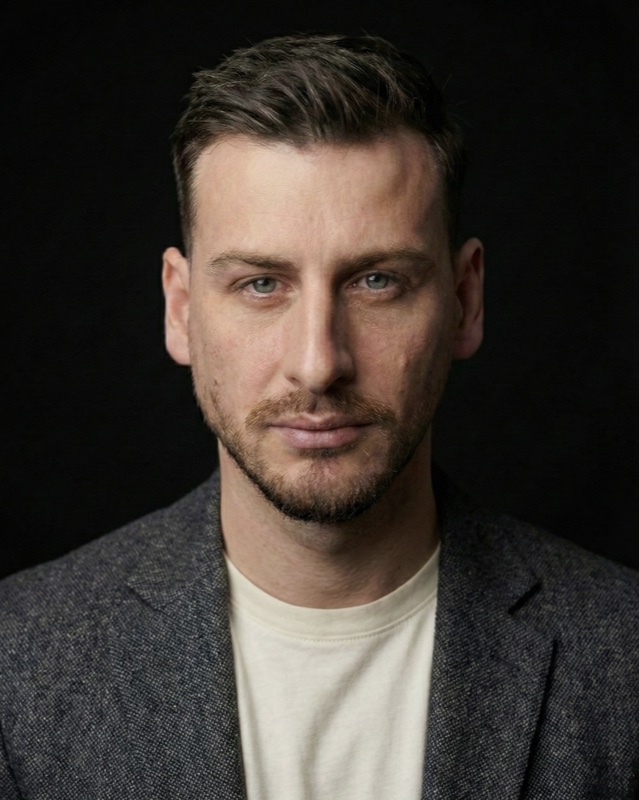
Founder
How It Works
Every project starts the same way: define the task. What's the question? What does a good answer look like? What sources matter? Clear input, clear expected output. No ambiguity.
From there, I build specialized agents for the task: not generic chatbots, but purpose-built AI workflows. A research agent that knows which databases to query. An analyst that understands financial metrics. A critic that looks for what's missing. Each agent has a role because each role requires different reasoning.
These agents don't work alone. They're orchestrated: sequenced, parallelized, and cross-checked against each other. The architecture combines state-of-the-art LLMs with a knowledge graph, specialized research tools, and structured evaluation pipelines. Not a single prompt. A system.
The goal isn't to produce more. It's to free you for the work that matters.